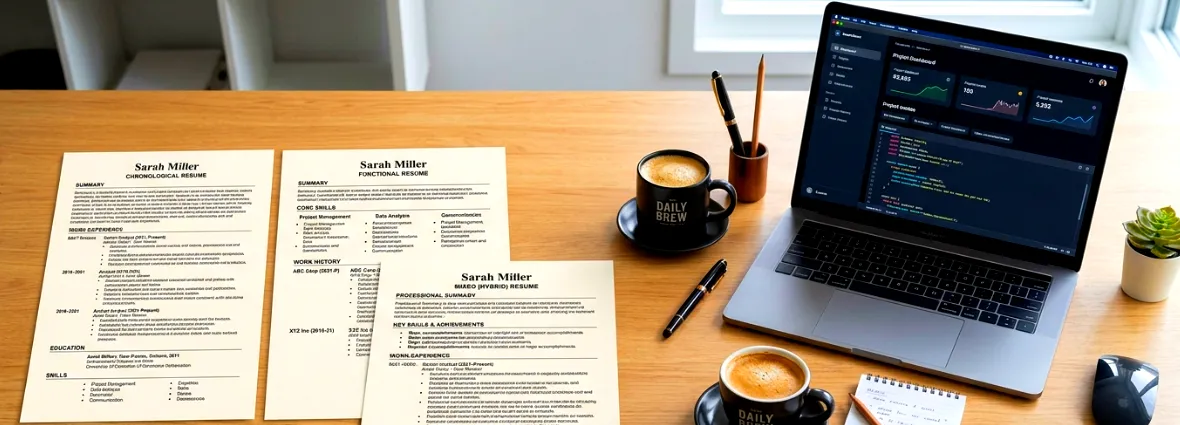
How many types of resume exist today? In a competitive job market, there are multiple formats to structure your work experience. Among them, the ATS (Applicant Tracking Systems) Format stands out, designed to be read by automated filtering systems. It is ideal because it eliminates the risk of being discarded due to design issues. Additionally, there are the Harvard Format, the Functional Format, and the Creative Format.
Below, we analyze in depth the characteristics, pros, and cons of each one to help you land your dream job.
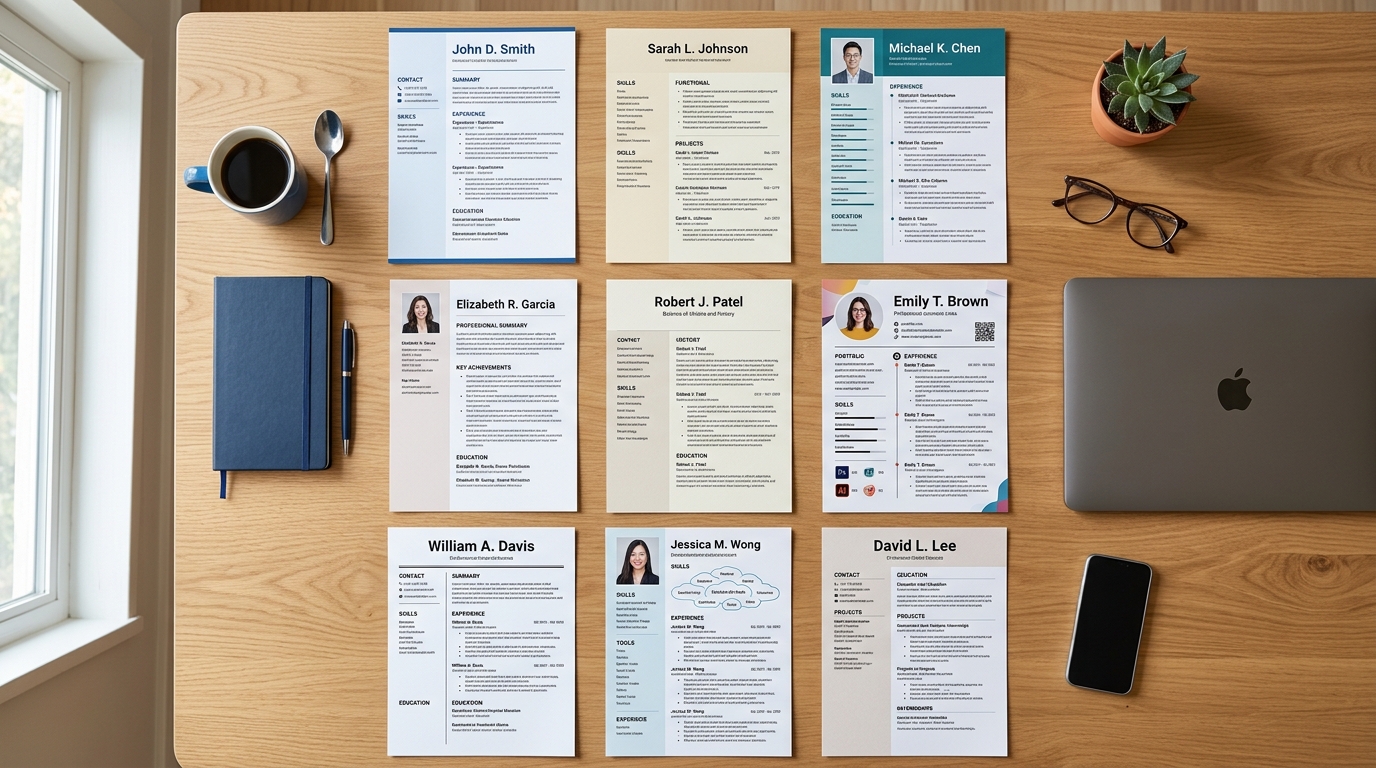
To understand which one best suits your profile, let's compare the four most used resume structures:
| Resume Format | Main Purpose | Ideal for... |
|---|---|---|
| ATS Format | Passing automated reading filters. | Online applications on corporate portals. |
| Harvard Format | Highlighting excellence and traditional roles. | Executive, business, or academic profiles. |
| Functional Format | Highlighting skills and masking gaps. | Career changers or recent graduates. |
| Creative Format | Visually impacting the recruiter. | Design, marketing, and art professionals. |
1. The 4 resume formats in detail
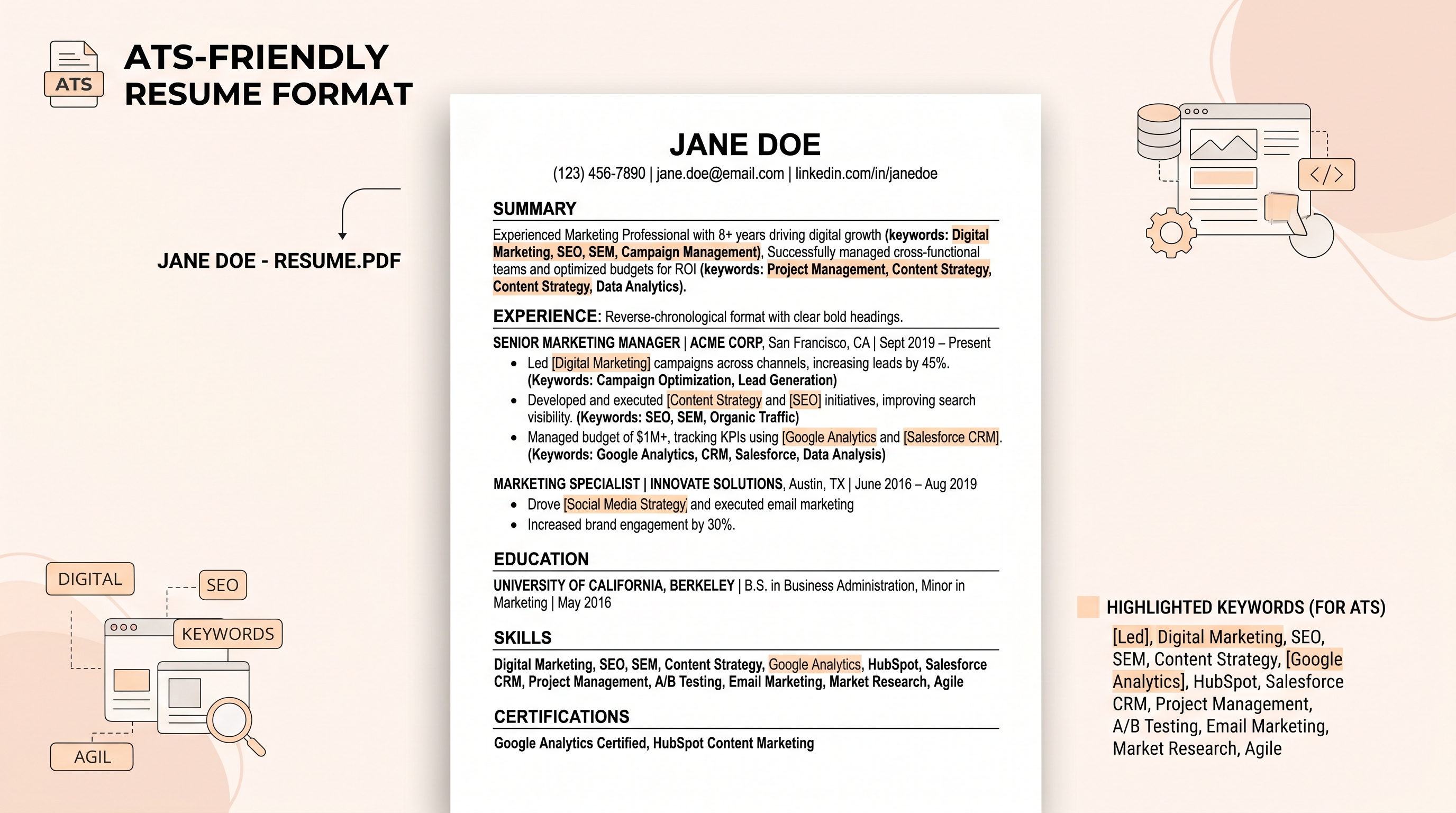
The ATS Format (Optimized for Algorithms)
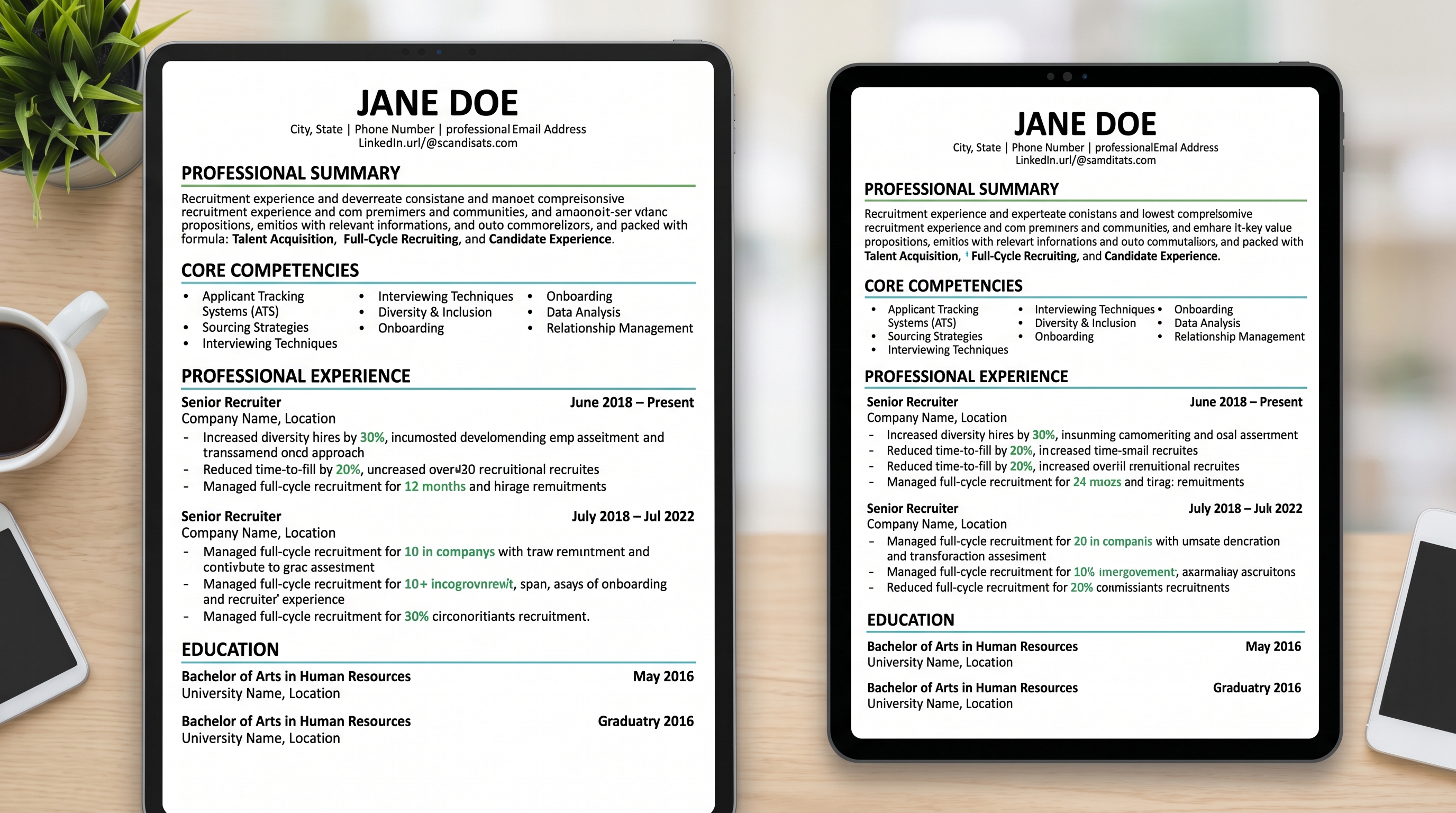
This format prioritizes text readability so that Applicant Tracking Systems (ATS) can extract information correctly. It uses a single column and eliminates unnecessary visual elements.
- Pros: Guarantees almost 100% compatibility with online recruitment platforms. It gives you the certainty that your application will be read by the system.
- Cons: It may look too simple or plain for creative industries.
The Harvard Format (Academic and Business)
It is the traditional design used by Harvard University. It is characterized by an extremely elegant design with two columns or one column with sober dividing lines, using classic fonts (such as Georgia or Garamond) and perfect alignment.
- Pros: Conveys a high level of professionalism, structure, and authority. Excellent for finance and law.
- Cons: If it has too many subdivisions, it can hinder readability in older ATS systems.

The Functional Format (Skills-Based Approach)
This resume does not group your work history in chronological order, but rather by areas of expertise or skills. It is ideal for diverting attention from periods of unemployment.
- Pros: It allows you to highlight what you know how to do instead of focusing on where and when you did it.
- Cons: Some traditional recruiters do not like it because it makes it difficult to see the candidate's chronological trajectory.
The Creative Format (Design and Visual Impact)
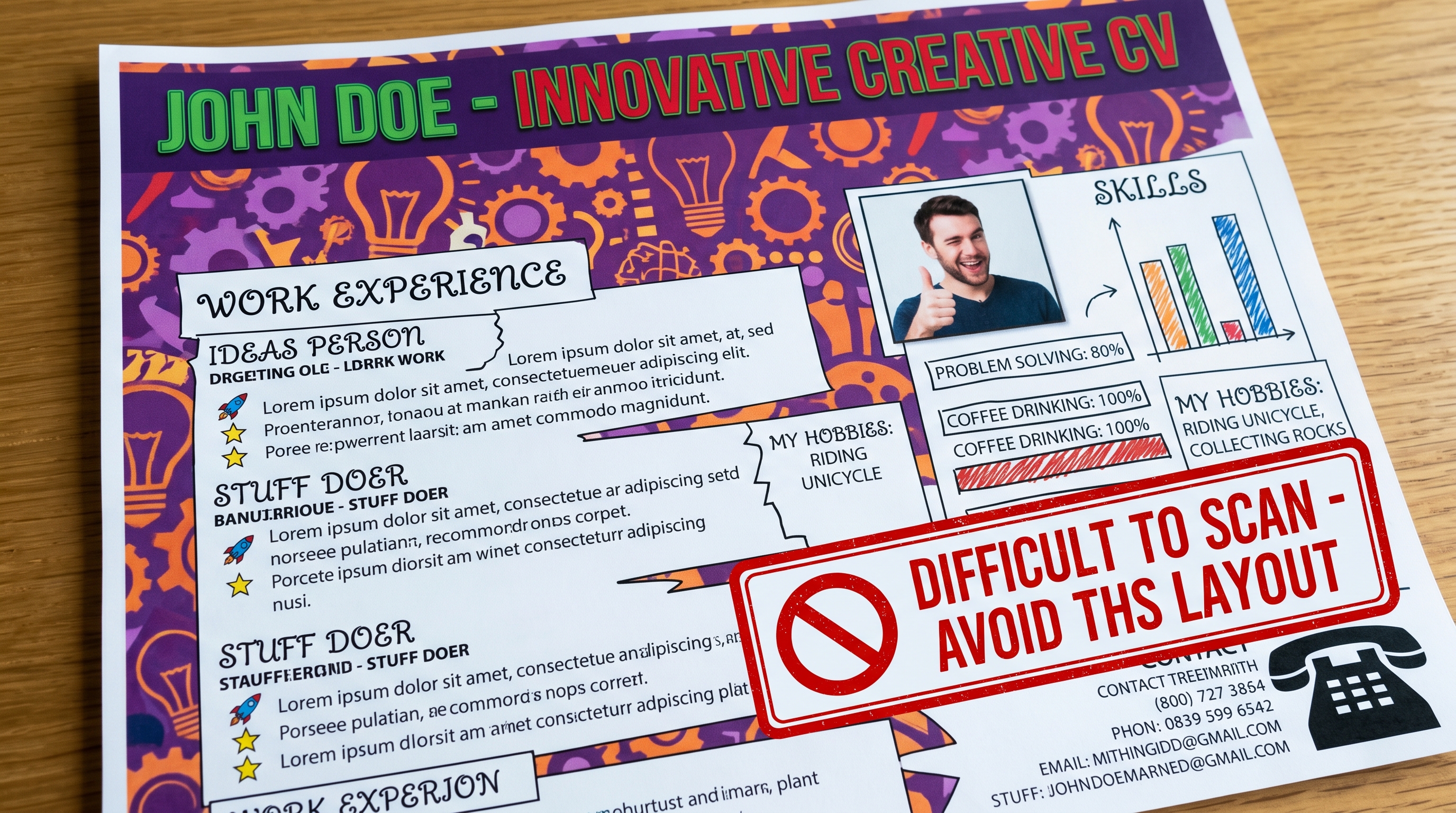
It leverages the use of custom color palettes, infographics, and interactive elements to highlight the candidate's portfolio in a visually attractive way.
- Pros: It achieves an immediate and unforgettable visual impact if delivered directly to a recruiter.
- Cons: It is the main enemy of automatic ATS filters.
2. You might ask: Which one should I choose?
Choosing the perfect resume format depends directly on your background and the channel you use to apply:
- If you apply through web portals (such as LinkedIn or job boards): Always use the ATS Format. It is mandatory so that you are not discarded by machines in the first filter.
- If you send your resume directly to the recruiter via email or LinkedIn Inbox: The Harvard Format or the Hybrid Format are your best allies, as they will immediately impress the human recruiter's eye.
- If you changed fields or have employment gaps: The Functional Format will help you explain how your current skills adapt to the new position.
- If you work in design, advertising, or art: Opt for the Creative Format, but make sure you also have a version in ATS format in case you need to apply through a formal portal.
Learn how to prepare your resume effectively
Learning how to adapt your resume design will make a radical difference in the number of calls you receive. In this step-by-step video, we teach you how to structure your resume to have the maximum probability of success:
How to create a resume optimized for ATS filters
3. Words of motivation and hope in your job search
Searching for a job is a path full of challenges, learning, and personal growth. There are moments when fatigue or a lack of responses can sow doubts in your mind, but it is essential to remember that your value as a professional and as a person is not defined by an automated rejection email.
Every application you submit is an act of courage and one step closer to the place where your talents will be truly valued. Optimizing your resume is not just a technical trick to fool a system; it is a way to respect yourself, organizing your story so that it shines with the strength it deserves.
Keep your head held high. With patience, the right tools, and a positive attitude, you will open the right door. Your next big professional step is waiting for you!

3 Quick steps to optimize your application today
1. Step 1: Adapt your resume according to the channel. Keep a clean ATS version for online applications and another visually polished one (Harvard style) if you have direct contact with people.
2. Step 2: Make a list of your achievements. Instead of just listing your past responsibilities, write bullet points focused on measurable achievements using action verbs.
3. Step 3: Be persistent and stay positive. Dedicate a structured daily time to search for offers, but also take breaks to look after your mental health and recharge your energy. Professional success will come!